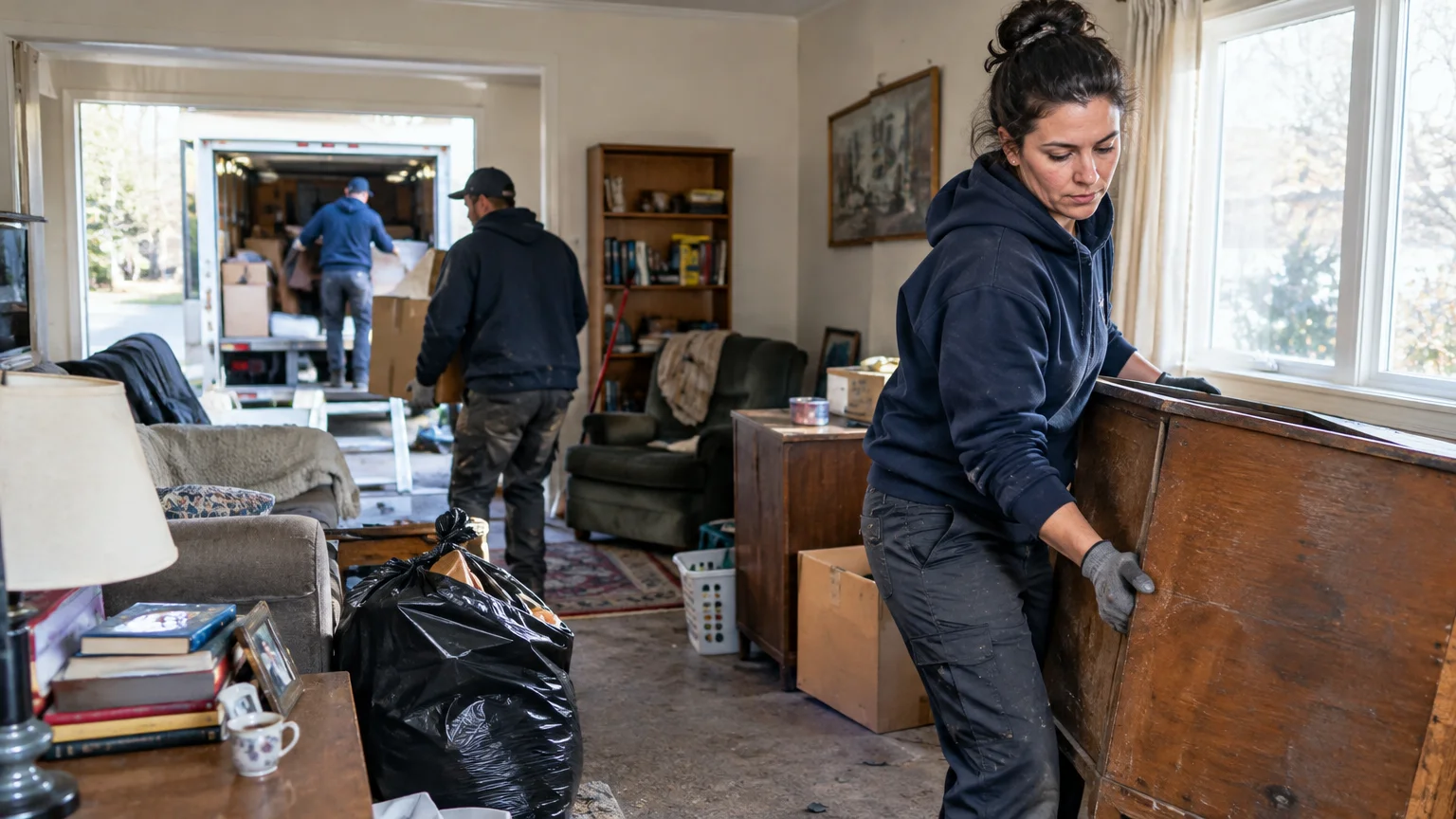
A full house cleanout feels easier when you divide the work into small areas and give each item a clear choice. Make a simple plan, protect important belongings, and sort items before moving them. A cleanout company can then handle bulky, heavy, or unsafe items that are hard to remove alone.
What should you do before starting a full house cleanout?
Before you start, make a room-by-room plan and decide what should happen with each item. A house cleanout service can remove unwanted items from a home. Still, you should protect documents, valuables, and keepsakes first.
Make a simple plan for each area
Walk through the home before carrying anything outside. Write down each room, attic, basement, garage, shed, and outdoor area that needs work. This keeps the project easy to track and helps you remember small spaces.
Start with a room that has less emotional value. A garage, laundry room, or storage closet may feel easier than a bedroom with family items. When one area is done, that progress can help you continue with the rest of the home.
Set one clear goal for each work session. You might work on one bedroom closet during one session. Another session could focus on one garage wall. Short work periods can help you stay focused and avoid feeling worn out.
Gather supplies and protect important items
Useful supplies include strong boxes, heavy bags, labels, tape, gloves, a dust mask, and a marker. A flashlight can help in dark storage areas. A hand truck may help move large items, but use it only on safe, clear paths.
Make a safe place for documents, jewelry, photos, keys, medicine, and other items that must stay. Put them in a marked box or a separate room. Tell family members that this area is off-limits during the cleanout.
A simple process can keep the work moving:
- Walk through the home and list each area that needs work.
- Remove papers, valuables, medicine, and important keepsakes.
- Gather boxes, bags, labels, gloves, and other needed supplies.
- Pick one small area and finish it before starting another.
- Set large items aside for a later removal plan.
San Mateo CA Junk Removal can help San Mateo homeowners choose a removal option for the size and type of the project. Planning first also makes it easier to explain the job when arranging local help.
How do you sort household items during a major cleanout?
Sort each item into clear groups before moving it from the home. Common groups include keep, donate, recycle, sell, and remove. Clear labels reduce second thoughts and help family members follow one plan.
Use simple categories that everyone understands
The keep group should include items that are used, needed, or deeply valued. The donate group may include clean clothing, working goods, and usable furniture. The recycle group may include paper, cardboard, metal, or some electronics, based on local rules.
The sell group works best for items in good shape and worth the time needed to list them. A house cleanout sale may move several usable items, but it can also slow the project. Set a firm deadline. Items that do not sell by then need another plan.
The remove group can include broken furniture, worn mattresses, damaged items, and household junk that cannot be reused. It may also include items that are too large for regular trash pickup. A full-service junk removal company may collect these items together, depending on local rules and materials.
Use labels that are easy to see. Colored tape can help, but plain words work well too. Keep each group in a separate area so items do not get mixed again.
Handle sensitive and unsafe items with care
Sentimental items deserve extra time. You may want one small memory box instead of every item from a loved one. Photos can be scanned, and family members can choose items before anything leaves the home.
Check items that may have value before donation or removal. These may include coins, collectibles, tools, artwork, jewelry, and old papers. Ask a qualified expert for help when the value or history is unclear.
Hazardous items need special care. Paint, fuel, chemicals, propane cylinders, pesticides, ammunition, and some batteries may need special disposal. Do not place them in normal trash or load them without knowing the local rules. The local solid waste authority can explain approved options.
Appliances also need a plan. Before removing a refrigerator, freezer, washer, dryer, or other large appliance, check whether a qualified person must disconnect it. Items with refrigerant may have special handling rules. Ask the removal provider what materials it accepts before the appointment.
How can you make a full house cleanout easier and safer?
A cleanout is easier when the work moves from small items to large ones. Clear walkways, lift with care, and do not rush. Homeowners can handle simple sorting and cleaning, but heavy lifting and unsafe materials may need professional help.
Reduce stress with small, steady tasks
Use the four-box method for small rooms: keep, donate, recycle, and remove. Add a fifth area for selling when needed. Do not fill boxes so heavily that they become unsafe to lift.
Work from high shelves down to the floor. This keeps dust and small items from falling onto clean areas. Keep doors and walkways open. Place full bags and boxes in one staging area that does not block exits.
Take breaks and drink water. Good light helps you spot sharp edges, pests, mold, and water damage. If a room smells unsafe or shows signs of damage, stop work and get the right help.
You do not need a professional for basic sorting, sweeping, labeling, or wiping empty shelves. Professional help becomes more useful when the project has heavy lifting, tight stairs, large amounts of junk, or items that cannot go in regular trash.
Prepare furniture and appliances for removal
Empty drawers, cabinets, and shelves before moving furniture. Check behind and under each piece for papers, coins, medicine, or small valuables. Remove shelves and loose parts only when it is safe and helpful.
For large appliances, clear a path from the item to the exit. Measure tight doorways when needed. Protect floors and walls with suitable covers, but do not drag heavy items across the floor. Never try to move a large appliance alone.
A hot tub, sectional sofa, piano, or heavy workbench may need several people and special tools. The same is true for items in an attic, basement, or upper floor. Tell the removal provider about stairs, narrow doors, gates, and long walks to the truck.
Do not cut wires, open sealed systems, break apart appliances, or handle unknown liquids. These actions can cause injury or release unsafe materials. A removal team can explain what it can take and what needs another disposal option.
When should you hire help for a full house cleanout?
Professional help makes sense when a cleanout is too large, heavy, urgent, or emotional for one household. A local junk removal service can reduce lifting and help move unwanted items from the home in an orderly way.
Know when the project needs extra support
You may want help when several rooms are full, a move-out deadline is near, or the home has bulky furniture. Estate cleanout service can also help families manage a property after a loss. This can be useful when relatives live far away or cannot do the physical work.
Professional support may help when a home has narrow stairs, limited parking, heavy appliances, mattresses, construction debris, or a large garage pile. It may also help when someone has limited mobility or cannot safely lift and carry items.
The right provider should explain what it accepts and how the crew will reach the property. Ask about appliances, electronics, mattresses, tires, hot tubs, and other unusual items before scheduling. This helps prevent delays on the service day.
What should homeowners expect from a removal service?
When arranging residential junk removal, share the property location, the areas involved, and the main types of items. Clear details help the company prepare for stairs, narrow access, large furniture, appliances, and other special needs.
The crew may review the items and the path before starting. Point out anything that must stay. Keep pets and children away from work areas while items are carried out.
A full-service junk removal company may sort, lift, load, and haul accepted items away. The exact service depends on the provider, local disposal rules, and the materials present. The final cost is confirmed on a quote after the job details are reviewed.
San Mateo CA Junk Removal serves homeowners who need organized help with residential cleanouts and nearby communities. Its service area includes places such as Hillsdale, San Mateo Park, Burlingame, Foster City, Belmont, and San Carlos. Contact details are available through the company website when you are ready to arrange help.
Key takeaways
- Plan the home by room before carrying items outside.
- Keep documents, medicine, valuables, and keepsakes separate.
- Sort items into groups for keeping, donating, recycling, selling, and removal.
- Do not move hazardous materials or heavy items without the right support.
- Share access details and unusual items before arranging junk removal.
Frequently Asked Questions
What is a cleanout service?
A cleanout service removes unwanted items from a home, room, garage, attic, basement, or estate. Depending on the provider, the work may include carrying, loading, and hauling accepted items away. Ask what materials the company accepts before booking, especially chemicals, appliances, and unusual items.
How can someone get rid of an old refrigerator?
First, remove food and personal items. Then check whether a qualified person must disconnect the refrigerator. Refrigerators may contain refrigerant and may need special handling. Contact the local waste authority or a removal provider before moving it.
What happens to old appliances after removal?
Old appliances may be reused, recycled, donated, or sent to an approved disposal site. The result depends on the appliance condition, its materials, and local rules. Ask whether the provider accepts the exact appliance and whether it must be emptied or disconnected first.
How can someone get rid of a hot tub?
A hot tub often needs draining, safe disconnection, and careful breakdown before removal. It may require several workers and special tools because of its size and weight. Do not cut electrical lines or move one alone. A qualified removal team can explain a safe plan for the property.
Conclusion
A full house cleanout does not need to happen all at once. A room-by-room plan, simple sorting groups, and safe work habits can make the process easier. When the job includes heavy furniture, appliances, estate belongings, or large amounts of junk, San Mateo CA Junk Removal can help reduce the strain.
If you need help planning the next step, Contact us today to arrange support from San Mateo CA Junk Removal.
If you are not sure what you are dealing with, it is worth having someone look at it before it turns into a bigger job. Get in touch with San Mateo CA Junk Removal today and we will tell you where you stand.