A junk haul clears unwanted office furniture, equipment, and other large items from a workplace. For a smooth office cleanout, sort items, plan building access, and set aside electronics and private records. San Mateo CA Junk Removal helps businesses plan a haul around their space and needs.
Table of Contents
- What does a commercial junk haul include?
- When should a business schedule an office junk haul?
- How should you prepare an office for junk hauling?
- How are desks, cubicles, and bulky office items removed?
- How should businesses handle electronics and sensitive materials?
- What affects the scope of a commercial junk haul?
- How can you choose a reliable commercial junk removal service?
- Frequently Asked Questions
- Key takeaways
- Conclusion
What does a commercial junk haul include?
A commercial junk haul takes unwanted items out of a business space. It may include office cleanouts, furniture removal, and other items the business no longer needs. The work depends on what must go, how the building is set up, and what the business wants to keep.
Common items removed during an office cleanout
An office cleanout may include desks, chairs, filing cabinets, tables, shelves, and cubicle parts. Businesses may also clear old decorations, supplies, broken furniture, or items stored in back rooms. Some jobs include appliances, such as a break-room fridge. Ask first how those items can be handled.
Make a clear list to help avoid mix-ups. Mark each item that should leave, and label anything that must stay. If furniture is still in good shape, staff can decide whether to reuse or donate it. Broken furniture may need a different plan from useful desks or chairs.
How office junk hauling differs from routine waste removal
Routine waste removal usually takes everyday rubbish from normal business activity. A commercial junk haul handles larger items, bulky loads, or a full office clearout. It may need more planning because of building access, shared halls, elevators, and the need to keep work areas safe.
A business may need to remove office junk before new furniture arrives or after a team moves. A property manager may need to clear an empty suite before showing it to new tenants. San Mateo CA Junk Removal can help businesses talk through the cleanout and plan for items that need special care.
When should a business schedule an office junk haul?
Schedule a junk haul when unwanted items block work, take up useful space, or need to leave before a move or renovation. Planning early gives staff time to sort items. It also gives the building team time to prepare for the work.
Office moves, renovations, and lease transitions
A move is a good time to review desks, chairs, and storage items. The business can decide what will go to the new office and what is no longer useful. Sorting before moving day helps avoid taking unwanted items along and clearing them later.
Renovations can also call for a cleanout. A contractor may need an open room for repairs or new fixtures. Before work starts, confirm what must go, what can stay, and when the space needs to be clear.
Lease changes need careful planning. Property managers and tenants should agree on which items belong to the business and which belong to the building. They should also check move-out rules and the date the office must be empty. A written list can help everyone follow the same plan.
Reducing clutter in active workplaces
A cleanout can help when extra furniture, old supplies, or broken items make rooms hard to use. Businesses do not need to wait for a big move. They can plan a smaller removal when clutter fills meeting rooms, storage areas, or paths employees use each day.
Staff should not have to guess what can go. Ask team leads to check shared rooms and mark items that are still needed. Keep paths clear while sorting, and do not stack heavy items where they might fall. For ongoing clutter, set a simple way to review unused items before they spread into more work areas.
How should you prepare an office for junk hauling?
Prepare the office by sorting items, protecting anything that must stay, and sharing clear details about the building. Good planning helps the crew work in the right areas. It also helps prevent confusion for employees and property staff.
Identify items for removal and items to keep
Walk through the office before the planned haul. Make a list of the furniture, equipment, and other items that should leave. Mark items that must stay with clear signs. Move small valuables and personal items away from the work area.
A useful sorting plan can include these groups:
- Furniture and fixtures approved for removal.
- Electronics that need separate handling.
- Documents and files that must remain private.
- Items to keep, reuse, or give to another team.
- Items that need review before a final choice.
Do not wait until the crew arrives to make decisions. Empty desks and cabinets that hold files or personal items. A staff member should be ready to answer questions about items that are not clearly marked. That person can confirm what is approved to leave.
Coordinate access, building rules, and employee communication
Tell the service team where the office is, what items are involved, and what access limits apply. Note stairs, elevators, loading areas, narrow doors, or rules for shared spaces. The building manager may need to approve a time or reserve an elevator.
Tell employees which rooms will be cleared and what they should take from their desks. Share the plan with reception, security, and property staff when needed. If the business stays open during the cleanout, agree on how workers and visitors can avoid the work area.
How are desks, cubicles, and bulky office items removed?
Desks, cubicles, and other large items need a plan for taking them apart, carrying them, and moving them through the building. The right way depends on the item, the path out, and whether it can leave in one piece.
Planning disassembly and safe movement
Some desks and cubicles must be taken apart to fit through a doorway or into an elevator. Point out built-in units, attached shelves, and workstations with cables or shared parts. Check before taking anything apart, so parts still in use are not disturbed.
Staff can prepare by clearing drawers and surfaces, removing personal items, and marking parts that should stay. Do not ask an employee to lift or take apart a heavy unit unless they are trained and it is safe. A professional crew can look at the item and plan the move based on its size and route.
Protecting hallways, elevators, and shared spaces
Before work begins, clear the path from the office to the building exit. Move loose items out of hallways, and tell the crew about tight doors or corners. If the office shares space with other tenants, follow building rules for noise, access, and loading areas.
A property manager may ask for floors or walls to be protected in busy areas. Ask how the team plans to protect shared spaces and keep the work area tidy. Good planning matters in buildings where employees, visitors, and other crews use the same halls.
How should businesses handle electronics and sensitive materials?
Businesses should separate electronics and private materials from general office junk before the haul. Computers, monitors, printers, and similar equipment may need special care. Private files and stored data need their own secure plan, not a place in a general removal pile.
Separate electronics from general office junk
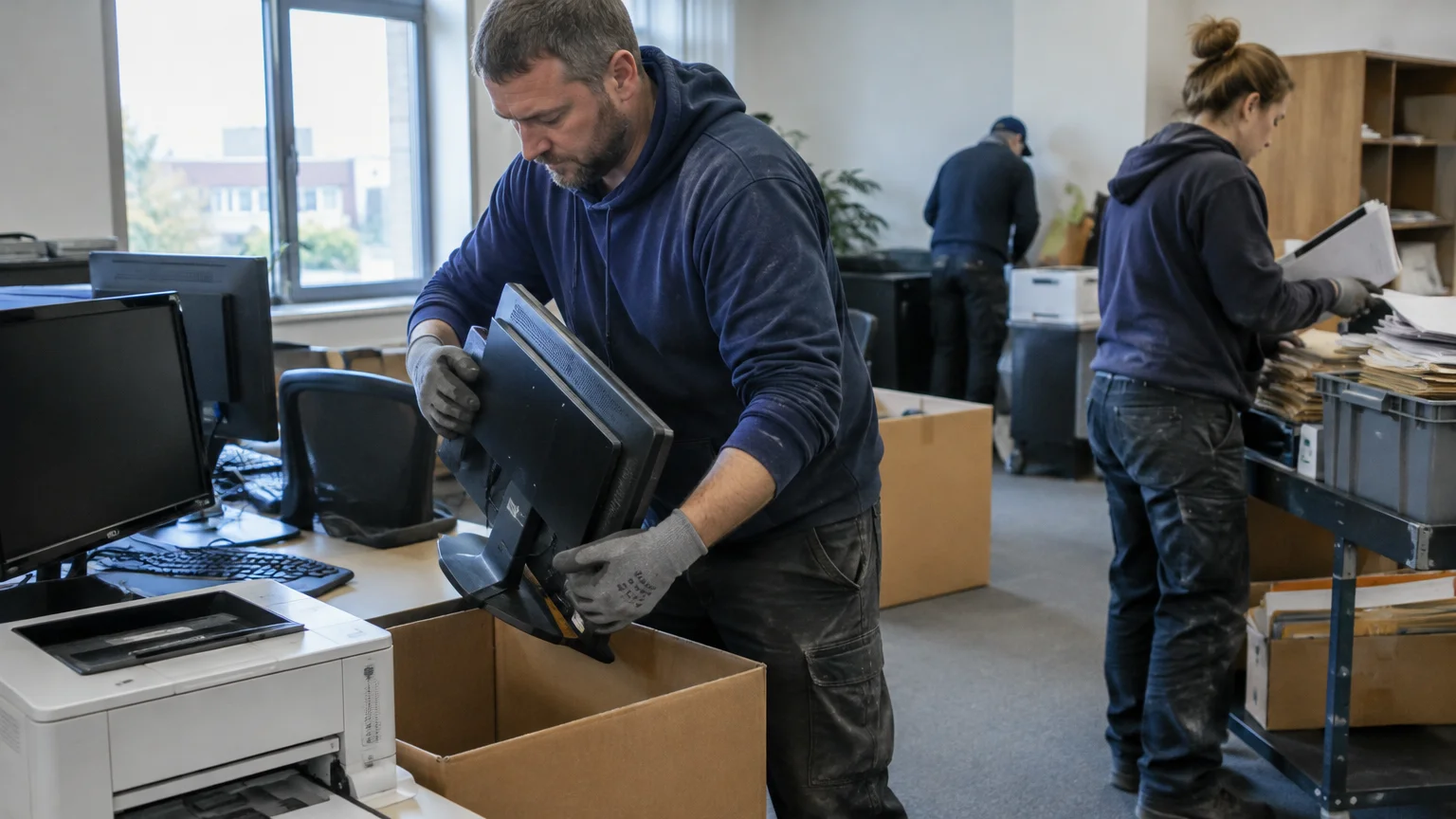
Set aside computers, screens, printers, phones, and other electronic equipment. Ask how these items will be handled and whether the business needs a separate electronics recycler. Do not assume every junk hauling service takes every kind of electronic item.
Before equipment leaves, follow the business’s rules for devices and data. A staff member or IT provider can remove business data and confirm the device is ready to go. Keep cords, accessories, and equipment for reuse in a separate, marked area.
Appliances need a clear plan, too. If the office has a fridge to remove, ask whether the service accepts it and whether it needs preparation. Take out food and loose items first. For items with special disposal rules, check with the local waste authority or a suitable recycler.
Protect confidential records and workplace data
Do not put private files in a general junk pile. Keep paper records in a secure place and follow the company’s rules for keeping or destroying them. Staff should check drawers, cabinets, and boxes before approving them for removal.
Old devices may still hold digital information after files are deleted from view. The business should use an approved process to wipe or destroy data before equipment leaves its care. If anyone is unsure, ask the IT or records team to check the item first.
What affects the scope of a commercial junk haul?
The scope of a commercial junk haul depends on how much material there is, what items need removal, the building layout, and the timing. Sharing these details early helps the business and service team plan the crew, access, and handling steps. The plan should match the items and the site.
Volume, item type, access, and scheduling considerations
The amount of furniture and other items is one part of the job. Removing a small group of chairs is different from clearing a whole office floor. Large items, heavy cabinets, cubicle walls, and appliances may also need more planning than loose office supplies.
Access can affect the plan. A ground-floor office with a clear loading area is different from an upper-floor space with limited elevator access. Stairs, long halls, set building hours, and shared entrances are all details to share before booking.
Timing matters as well. A business may need the work done before a lease deadline, renovation, or move. Share the date and any limits on when the crew can enter. If items need special care, explain that early rather than waiting until removal day.
How to request a clear plan for an office cleanout
To request a clear plan, describe the items, the space, and the building rules. Photos or an item list can help show what the work involves. Mention electronics, appliances, heavy furniture, and anything that must not be removed.
Ask what the business needs to prepare, how building access will work, and which items the service can take. A written plan can make each person’s role clear for the business, property manager, and removal team. Confirm the work before the scheduled day, especially if the item list or access changes.
How can you choose a reliable commercial junk removal service?
Choose a commercial junk removal service that listens to the business, explains its plan, and answers questions about handling and building access. A good fit understands that an office cleanout means more than carrying items out of a room.
Questions to ask about planning, handling, and disposal
Ask how the team plans to move large items, protect shared spaces, and handle electronics or appliances. Check whether the service accepts the items on your list and can follow the building’s access rules. Also ask what needs to be ready before the crew arrives.
Useful questions include:
- Which items can the team remove from this office?
- How should staff prepare desks and cabinets?
- Can the team follow the building’s access rules?
- How are electronics and appliances handled?
- What should staff do with private records and data?
A clear answer is more helpful than a broad promise. Share any special needs and ask who will confirm the item list. If the service cannot take something, arrange another suitable option before cleanout day.
Frequently Asked Questions
How do businesses get rid of old office furniture?
Businesses can sort furniture into items to keep, reuse, donate, or remove. A commercial junk haul may help clear large or broken pieces. Before booking, list the items and check the building’s access rules. Take files and personal items out of desks and cabinets.
Can a junk removal service take office electronics?
Some services take office electronics, but accepted items and handling plans can differ. Ask about computers, monitors, printers, and other devices before the cleanout. Remove or protect business data through an approved process before equipment leaves the workplace.
How should a business prepare for an office cleanout?
Make a clear list of what should go and what must stay. Empty desks and cabinets, and set aside electronics and private records. Tell employees which areas will be cleared. Share access details and building rules with the service team before the planned work.
Can an office cleanout include a break-room refrigerator?
It may, but confirm that the service accepts appliances before scheduling. Empty the fridge and ask whether it needs any other preparation. If it cannot be taken with the cleanout, check with a local appliance recycler or waste authority about another option.
How can a business find junk removal near me?
A business can search for commercial junk removal in San Mateo or nearby areas. The service area includes Hillsdale and San Mateo Park, as well as Burlingame, Foster City, Belmont, San Carlos, and nearby communities. Compare services by asking about accepted items, access plans, electronics, and building rules. Sharing an item list helps explain what the office needs.
Key takeaways
- A commercial junk haul can remove unwanted furniture, equipment, and other large office items.
- Sort items and protect private records before the crew arrives.
- Share building rules, timing needs, and special handling details early.
- Confirm that electronics and appliances can be accepted and handled as needed.
- A clear item list helps the business plan a smoother office cleanout.
Conclusion
An office cleanout works best when the business decides what should go, protects what must stay, and plans access early. A thoughtful plan helps employees, property managers, and the removal team work together with less confusion. San Mateo CA Junk Removal helps businesses plan a commercial junk haul. Contact us to discuss your office cleanout needs.
If you are not sure what you are dealing with, it is worth having someone look at it before it turns into a bigger job. Get in touch with San Mateo CA Junk Removal today and we will tell you where you stand.