Appliance disposal FAQs can help you choose the safest and most earth-friendly option for old refrigerators, washers, dryers, stoves, and dishwashers. Working appliances may be donated or reused. Broken units often need recycling or approved disposal because they contain metal, wiring, glass, oils, or other materials that should not enter regular trash.
Table of Contents
- What is the most eco-friendly way to dispose of old appliances?
- Can refrigerators and freezers be recycled?
- How should washers, dryers, stoves, and dishwashers be disposed of?
- Can old appliances be donated instead of discarded?
- What are the rules for appliance disposal?
- How does appliance pickup work?
- How much does appliance disposal cost?
- Frequently Asked Questions
- Key Takeaways
- Conclusion
What is the most eco-friendly way to dispose of old appliances?
The best choice depends on the appliance’s condition. A clean, safe, working appliance may be reused or donated. A damaged or unsafe unit usually belongs in a proper recycling or disposal program. This keeps metal, glass, plastic, and other parts out of landfills.
San Mateo CA Junk Removal helps property owners sort through these choices before pickup. The right plan can protect workers, prevent spills, and keep restricted materials out of regular waste. Appliance disposal is not only about moving a large item. Each part should go to the right place.
When should an appliance be reused or donated?
Reuse is often best when an appliance works well and has no safety issue. The unit should be clean, complete, and ready for another home or business. A donation group may also ask for working controls, safe cords, and proof that the appliance can be tested.
Do not donate a unit with a damaged cord, gas leak, broken door, exposed wire, or major water damage. These problems can harm the next user. Repair may make sense for a newer appliance. An older unit with many faults may be better for recycling.
When is recycling the better option?
Recycling is often better when an appliance cannot be used safely or repaired with ease. Recyclers can separate metal, wiring, plastic, glass, and other parts. They can also handle materials that need care, such as refrigerants, oils, insulation, and electronic controls.
Do not place a large appliance at the curb without checking local rules. Some areas need scheduled pickup, special drop-off, or approved handling. San Mateo CA Junk Removal can help San Mateo homeowners decide if an old appliance should be donated, recycled, scrapped, or sent through another safe route.
Can refrigerators and freezers be recycled?
Yes, refrigerators and freezers can often be recycled, but they need careful handling. These units may contain refrigerant, oil, foam insulation, and electrical parts. A trained recycling or disposal program should manage these materials before the metal shell is processed.
The U.S. Environmental Protection Agency explains federal refrigerant management rules for equipment with certain refrigerants. Rules can vary by appliance and handling method. Do not cut lines, remove compressors, or release refrigerant yourself.
Why do refrigerants and insulation require special handling?
Refrigerant is the fluid that helps a cooling appliance remove heat. It must be recovered with the right tools by trained workers. Foam insulation may also contain materials that should not be released or treated like normal household waste.
A refrigerator may look empty and harmless while still holding these materials. That is why normal trash pickup may not be safe. A responsible provider checks the unit, plans the move, and sends it through a route that can handle the cooling system.
What parts of a refrigerator can be recovered?
Many refrigerators contain useful steel, aluminum, copper, plastic, glass, and wire. The compressor, shelves, doors, and control parts may be separated during processing. Some parts may be reused, while others are prepared for material recovery.
Remove food before pickup and wipe away loose spills. Do not drain refrigerant or take apart the compressor. Keeping the appliance whole helps trained workers move it safely and choose the right handling method.
How should washers, dryers, stoves, and dishwashers be disposed of?
Washers, dryers, stoves, and dishwashers should be checked before removal. Working units may be reused or donated. Broken units often go to a recycling or scrap facility where metal, wire, motors, plastic, and other parts can be separated.
The right route depends on the appliance design and condition. Gas equipment needs extra care because a connected gas line can be dangerous. Electric appliances may still hold water, sharp edges, heavy motors, or damaged wiring.
Which appliance materials can be recycled or scrapped?
Large appliances often contain steel and other metals that can enter a scrap or recycling stream. Washers may have metal drums, motors, wiring, and plastic parts. Dryers may contain sheet metal, heating parts, motors, and controls. Stoves and dishwashers may include steel, glass, wire, and electronic panels.
A recycling facility decides which parts can be recovered. The process may differ by facility and local rules. Do not assume every part belongs in a curbside bin. Large-item recycling usually needs a separate drop-off or pickup.
What preparation is needed before pickup?
Preparation lowers risk and makes removal easier. Follow the maker’s shutdown steps and arrange utility disconnection when needed. A qualified person should handle gas, water, and electrical connections when the work is not safe for a homeowner.
Before pickup, owners should:
- Empty and clean the appliance.
- Remove loose shelves, racks, and stored items.
- Secure doors, lids, and moving parts.
- Clear a wide path from the appliance to the exit.
- Tell the pickup provider about stairs, narrow doors, or damaged flooring.
A homeowner can safely clean and empty many appliances. However, disconnecting gas lines, handling refrigerant, or fixing exposed wiring should not be a casual do-it-yourself job.
Can old appliances be donated instead of discarded?
Yes, donation may work when an appliance is clean, safe, complete, and working. Groups have their own rules for age, condition, size, and pickup access. Some accept only tested appliances. Others accept only certain types of equipment.
Donation keeps a usable item in service and may reduce the need for new materials. It also keeps a working unit out of the waste stream. Confirm acceptance before moving the appliance or arranging transport.
What condition should an appliance be in for donation?
A donated appliance should work as intended and have no known safety problem. It should not have a frayed cord, broken plug, cracked glass, heavy mold, active leak, or missing safety part. Tell the donation group about known faults instead of passing the problem to another home.
Clean surfaces matter too. Food residue, heavy grease, standing water, and strong odors may cause a group to refuse the item. A simple cleaning job is often safe for a homeowner to do without professional help.
How do donation requirements vary by appliance type?
Refrigerators and freezers may need working cooling and a door that seals well. Washers and dishwashers may need to run without leaks. Dryers may need a working drum, safe cord, and clear lint area. Stoves may need working controls and intact burners or heating parts.
A donation group may limit older models or units with missing parts. San Mateo CA Junk Removal can help property owners sort usable items from appliances that need recycling. If donation is refused, specialized appliance recycling may be the next responsible choice.
What are the rules for appliance disposal?
Appliance disposal rules depend on the local government, waste facility, appliance type, and materials inside the unit. Some places require special handling for refrigerators, freezers, air conditioners, and other cooling equipment. Others have separate rules for bulky items, scrap metal, and curbside pickup.
Check the local waste department or ask a qualified removal provider before setting out a large appliance. Rules may cover pickup dates, appliance preparation, refrigerant recovery, blocked sidewalks, and approved drop-off sites.
Why do local disposal and recycling rules matter?
Local rules help prevent unsafe dumping and protect collection workers. They also guide residents to facilities that can manage refrigerants, oils, electronics, glass, and heavy metal parts. A plan that works in one town may not work in another service area.
This matters for homes, rentals, offices, stores, and renovation work. Property owners must also protect tenants and keep shared paths clear. In the main San Mateo area, responsible removal means checking the route before the appliance leaves the property.
Which appliances may require approved handling?
Cooling appliances often need approved handling because of refrigerant and compressor parts. Gas appliances may need careful disconnection. Units with electronic controls may also need special processing at a recycling facility.
Never burn, crush, cut, or abandon a large appliance. Do not place a refrigerator or freezer in a normal trash container unless local officials clearly allow it. A proper appliance removal service can identify a safer next step without asking you to take apart the unit.
How does appliance pickup work?
Appliance pickup usually starts with a description of the unit, its condition, and the removal path. The provider may ask if it is a refrigerator, washer, dryer, stove, or dishwasher. Details about stairs, elevators, tight halls, gates, and utility lines help the crew plan safely.
San Mateo CA Junk Removal serves customers across the San Mateo area. The company can help arrange removal for homes, rentals, offices, and other properties. The process should focus on safe lifting, careful movement, and responsible sorting after collection.
What should homeowners and property owners do before pickup?
Empty the appliance, remove nearby clutter, and keep children and pets away from the work area. A clear path helps lower the chance of damage to walls, floors, doors, and the appliance. Share any known hazards before the crew arrives.
Useful details include:
- The appliance type and approximate size.
- Whether the unit works, is damaged, or leaks.
- The number of stairs or tight turns on the path.
- Any gate, parking, elevator, or access limits.
- Whether the appliance connects to water, gas, or electricity.
Do not hide a damaged cord, leak, pest issue, or unstable appliance. Clear information helps the provider choose the right tools and handling plan.
How are heavy appliances removed safely?
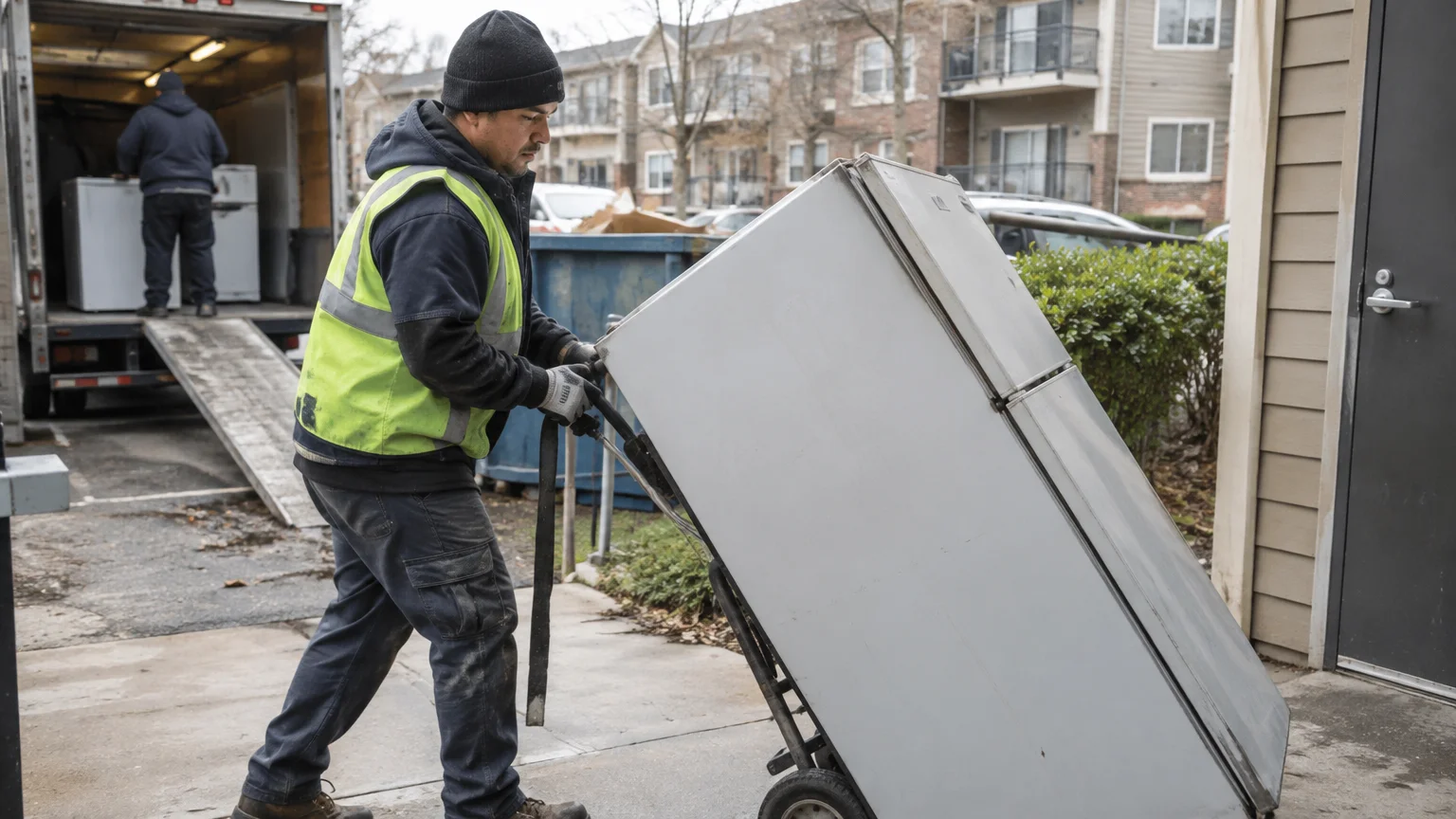
Heavy appliances are moved with controlled lifting, hand trucks, straps, and teamwork. Crews may protect floors and door frames while guiding the unit through narrow spaces. They should not drag an appliance across finished flooring or tip it without a safe plan.
Refrigerators should stay upright as much as possible during movement. Washers can hold hidden water, while dryers and stoves may have sharp edges. A trained crew checks the route first and keeps the appliance stable from the room to the collection vehicle.
How much does appliance disposal cost?
Appliance disposal costs vary with the appliance, access, condition, location, and disposal route. A small unit near an exit may be simpler to handle than a large appliance in a basement or upper floor. Refrigerant handling, extra labor, hard access, and special facility rules can also affect the final quote.
Compare the job details instead of assuming every appliance removal is alike. A single dishwasher may be easier to move than several large units. A refrigerator with a clear path may be simpler than a damaged unit behind tight doors or stairs. The final cost is confirmed on a quote after the details are reviewed.
What factors affect the cost of removal and disposal?
The main factors include the number and size of appliances, the distance to the vehicle, and the condition of the removal path. Stairs, elevators, narrow doors, long carries, and limited parking can make the work harder.
The disposal route also matters. Donation may require a usable condition and an accepting group. Recycling may require a facility that handles refrigerants or electronics. Scrap handling may depend on the materials that can be recovered. The final cost is confirmed on a quote after the job details are reviewed.
How does recycling, donation, or scrap handling affect the final quote?
Each route has different handling needs. Donation may require testing, cleaning, and careful transport. Recycling may require sorting and approved processing. Scrap recovery may involve separating heavy metal parts from plastic, glass, wire, and other materials.
Ask what happens after pickup and whether reusable items are separated from recyclable materials. San Mateo CA Junk Removal can explain the available removal plan for San Mateo properties. This helps the owner choose a practical route before scheduling work.
Frequently Asked Questions
How can someone get rid of an old refrigerator?
An old refrigerator should go through donation, approved recycling, or specialized appliance disposal. Empty it, avoid cutting refrigerant lines, and check local rules before pickup. A removal provider can move the unit safely and send it to a facility that handles refrigerants and recoverable materials.
Can an appliance go in a regular dumpster?
Large appliances usually should not go into a regular dumpster without checking the provider and local rules. Refrigerators, freezers, and some other units may need special handling. Ask about accepted materials before placing an appliance in a container or at the curb.
Is appliance pickup always available?
Pickup is not available in every area or for every appliance. Some programs accept only certain working units. Others limit service by location, condition, or appliance type. Confirm the requirements instead of assuming that appliance disposal near me results will apply to your property.
What happens to old appliances after pickup?
Old appliances may be donated, taken apart for material recovery, recycled, or sent through another approved route. The result depends on the condition and local facility rules. Responsible handling can recover metals and other parts while keeping refrigerants, oils, and unsafe materials out of regular waste.
Does a homeowner need a professional to prepare an appliance?
A homeowner can usually empty, clean, and clear access around an appliance. Professional help may be needed for heavy lifting, refrigerant handling, gas connections, exposed wiring, or difficult removal paths. When safety is uncertain, stop and use a qualified service instead of taking apart the unit.
These same ideas can help with office cleanout FAQs, retail removal FAQs, and house cleanout FAQs. In each case, check the item condition, access, local rules, and proper disposal route.
Key Takeaways
- Working appliances may be reused or donated when they are clean, safe, and complete.
- Broken refrigerators and freezers need careful handling because they may contain refrigerants, oils, insulation, and compressors.
- Large appliances should not enter regular waste streams without checking local rules first.
- Clear access and honest condition details help make pickup safer and easier.
- The final quote depends on the appliance, access, labor, and disposal route.
Conclusion
Responsible appliance disposal starts with a simple condition check. A working unit may help another household through donation. A damaged unit may be better for recycling or scrap recovery. Refrigerators and freezers need extra care because their cooling systems may contain materials that require approved handling.
Homeowners, landlords, business owners, and property managers should check local rules before placing an appliance outside. They should also clear a path and avoid unsafe work with gas, refrigerant, or damaged wiring. Contact us to arrange appliance pickup and discuss the right disposal option for your property.